 Alex Hill
4 min read
When "We Know It When We See It" Stops Working
Recognition without stated criteria reads as favoritism. Here is how to build an employee recognition program on defined behaviors instead of gut feel.
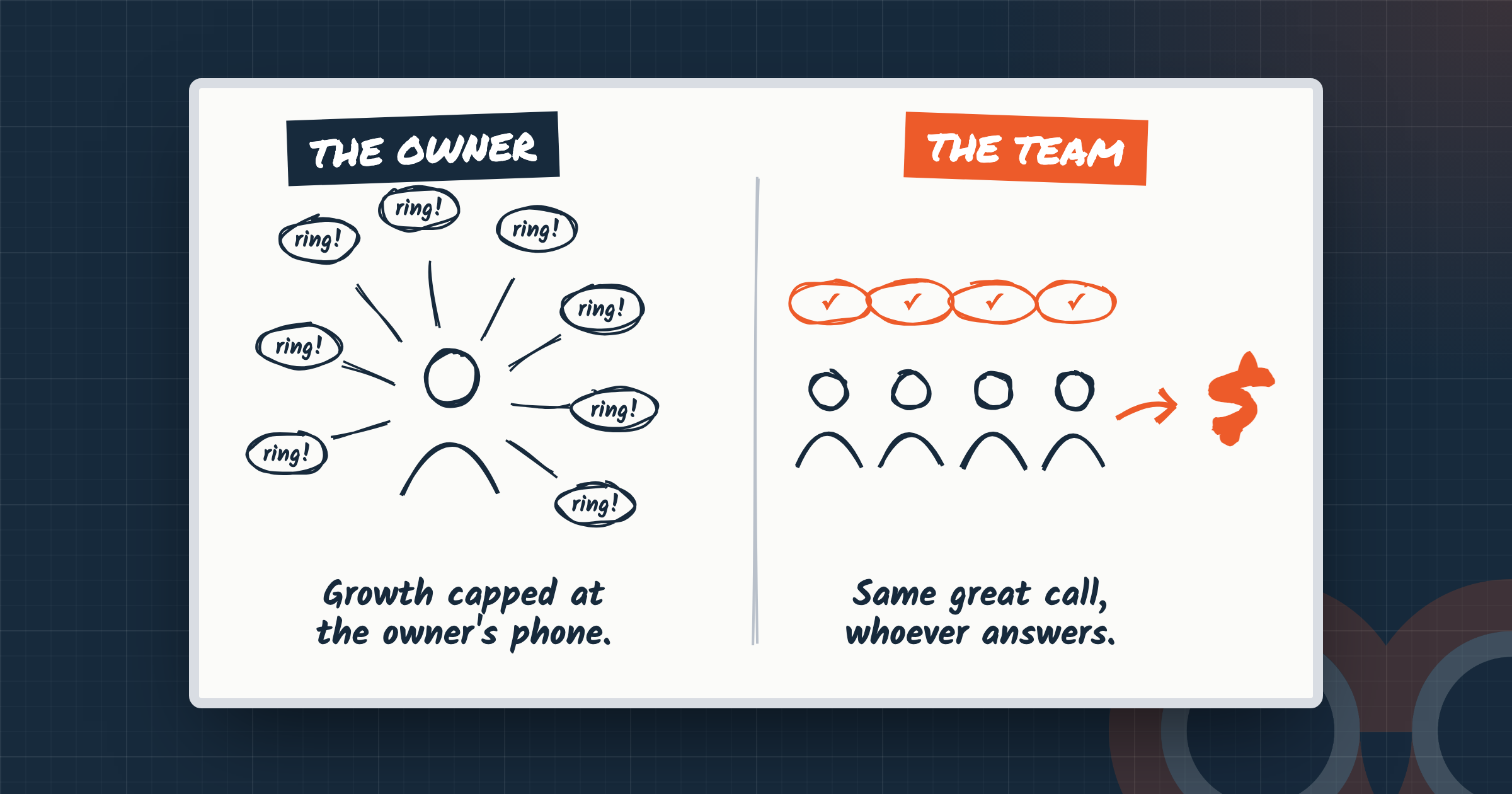
A while back, Dustin, our chair at CultureWise, told me about a chimney-sweeping company he and his partners had considered acquiring outside Boston early in their entrepreneurial journey.
By most measures, it was a terrific business. The owner had 15 to 20 employees and a well-established sales process, and it was generating somewhere around $1.5 million annually, all from customers within a roughly 10-mile radius.
Dustin wanted to know why he hadn't expanded. The owner told him he could only grow the business as much as his own capacity to handle customer service calls would allow. Nobody else on his team could handle those conversations the way he did, especially when something went awry.
Here was a well-established business with a great model and great potential… and yet it was totally limited by how many calls the owner could personally handle.
We see versions of this problem across businesses of every size. You may recognize it in your own company, though you may or may not realize how much it's costing you in time and missed growth opportunities.
The question is this: Can your customers count on the same excellent experience regardless of which person at your company they deal with?
Getting to that level of consistency is one of the most valuable investments you can make in the long-term profitability of your business.
And yet, when companies struggle with the downstream result of this — poor customer retention — they often reach for a painkiller to solve it, instead of a cure.
They launch referral programs, offer discounts, or introduce new incentives to encourage repeat business. But those things will have little impact if the underlying customer experience is still inconsistent.
A more lasting solution starts with the everyday behaviors of your employees.
Think about why your customers return to your business or recommend it to someone else.
It’s because they trust you. They know they'll receive a certain level of service because they've experienced it consistently. That experience happens when your team responds promptly, communicates clearly, takes ownership of problems, and follows through on their commitments. (These are all fundamental behaviors we help companies put into practice at CultureWise.)
When those behaviors become standard across your org, yes – you get happier customers. But it also inspires a ripple effect far beyond that.
Here’s how we see the progression:
Consistent employee behaviors → Better customer experience → Higher retention and more referrals → Lower acquisition costs → More revenue, profit and growth
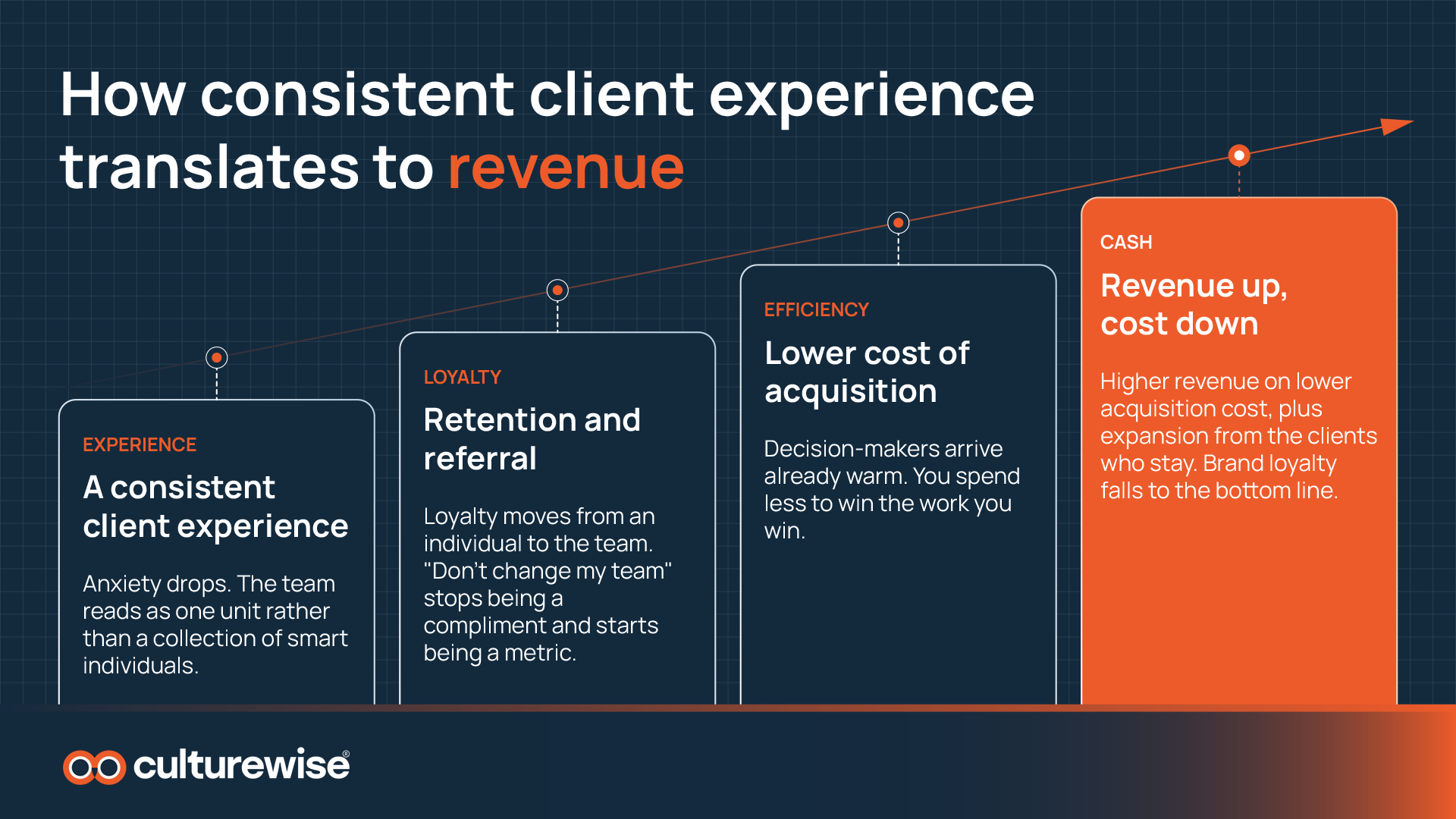
Existing customers continue spending with you, while referrals bring new business without requiring the same sales and marketing investment.
This is why we tell CEOs that they cannot separate culture from their financial strategy. The behaviors their people practice every day have consequences that show up on the bottom line.
As you plan for 2027, I'd encourage you to try a simple exercise with your leadership team.
Identify one employee who consistently delivers an exceptional customer experience. Someone customers ask for by name or regularly compliment.
Then ask: What does this person do consistently? Name the behavior explicitly. Maybe they proactively update customers, or they respond rapidly, or they always send a thank you after a meeting.
I offer a quick word of caution here: We often work with execs who have a difficult time extracting the behavior and instead focus on the person. You have to move from “Cindy is just good with the customers” — which is about Cindy — to “Cindy listens generously,” which is the behavior Cindy demonstrates.
Next, the real unlock happens when you consistently discuss what good execution of that behavior looks like and make it a broader expectation for the team. Start to bring it up in meetings regularly. Recognize others who practice it, over and over again. Over time, you can build an entire set of shared behaviors that make your best customer experience the standard.
This is a lever for growth you can lean on in 2027.
Distill what makes you great into something that is clear and actionable, something that can be taught and practiced. It’s not just Cindy. Give people the clarity, space and practice to get good at what Cindy does.
The results? More customers stick around, more refer you, and you have fewer issues requiring your personal intervention. You spend less to win the work you win and your acquisition cost goes down. Eventually, that leads to financial return. And as a bonus, your team starts to handle difficult customer situations without pulling you in, so you have more time to focus on growth.
Thanks for reading. See you in three weeks.
— Alex
P.S. If you want to go deeper on this implementation work, our CEO, David, is hosting a roundtable for company leaders in mid-November. Limited to 15 people for a candid, working conversation on how to make culture stick. More info here.
New content on building a high-performing culture, plus what's new on the platform and upcoming events.
4 min read
Recognition without stated criteria reads as favoritism. Here is how to build an employee recognition program on defined behaviors instead of gut feel.
3 min read
Instill Flow scores your meetings with AI. CultureWise builds the behaviors your team practices every week. Two tools, two very different jobs.
3 min read
Top Workplaces celebrates the culture you have. CultureWise builds it week by week. How the two fit together for leaders who want both.