5 min read

Building Culture When Half Your Team Never Checks Email

Building Culture When Half Your Team Never Checks Email

Most advice about company culture assumes one thing: that everyone works at a desk, opens a laptop, and reads their email. For a lot of companies, that assumption is wrong for half the payroll.

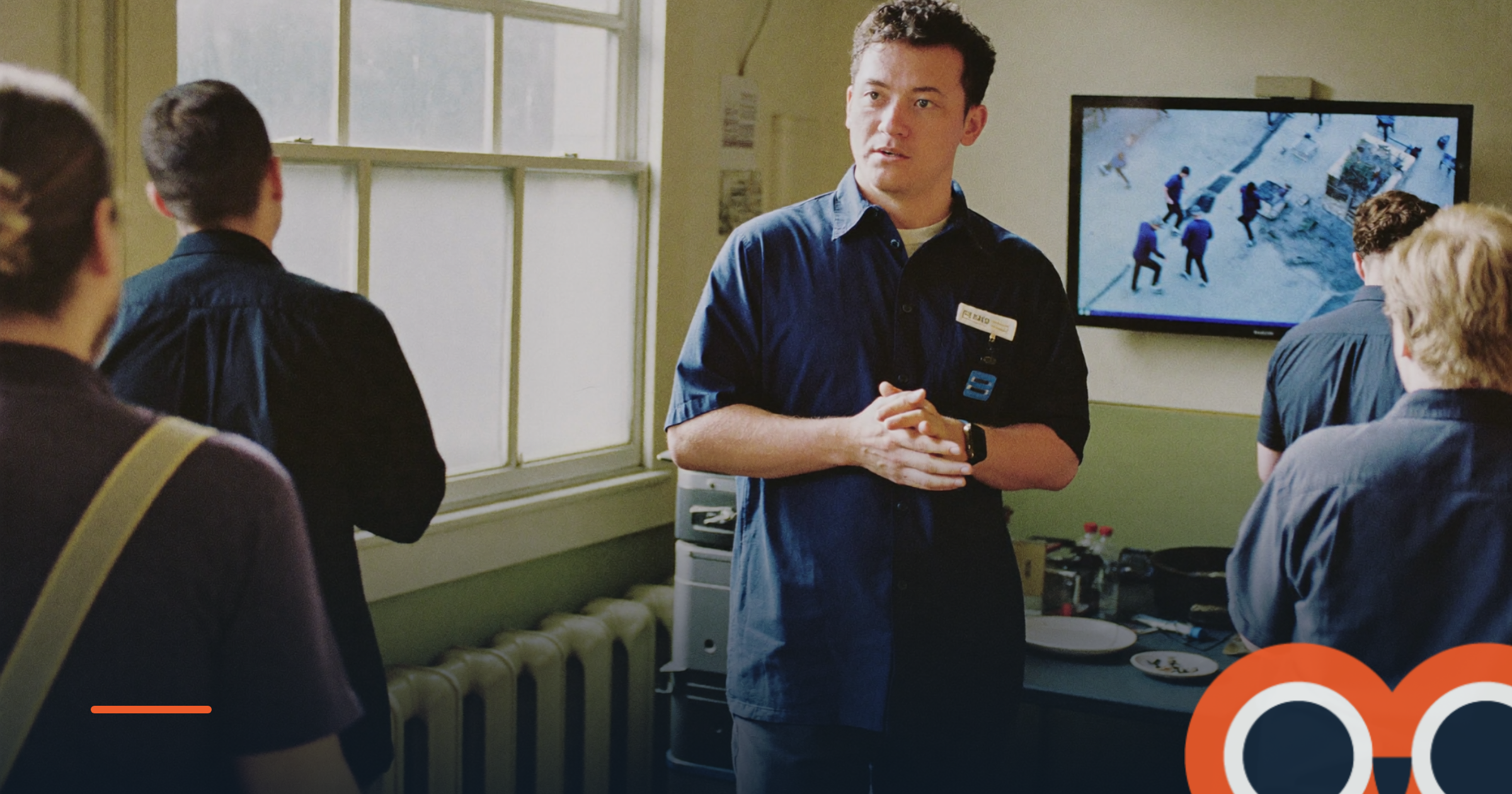
More than 2.7 billion people (about 80% of the global workforce) do not work behind a desk, according to Emcap. They are on shop floors, job sites, delivery routes, and store aisles. They clock in, do physical work, and clock out. Some check a company email account a few times a week. Many never do. A few still carry flip phones.

We heard this straight from a manufacturer with about 120 employees. Roughly 75 of them worked the shop floor and a handful still used flip phones. The owner's question was blunt: how do you give those people a shared culture when every tool everyone talks about assumes a screen, an inbox, and a device you can install software on?

Another manufacturer had already learned the hard way. They rolled out a culture app that lived on employees' personal phones. The reaction was fast and loud. Nobody wanted their employer on their personal device. “What are you doing with my phone. Don't tell me what to do with it.” Leadership pulled the app to keep the peace, and in pulling it, they shut their entire plant floor out of the culture program. The people who most needed a shared standard were the ones it never reached.

That is the deskless culture problem in one story. The barrier is rarely the culture itself. It is distribution. If your rhythm for building culture depends on email, a personal phone, or a desk, you have already excluded the people who keep the work moving.

The short version

  • Deskless and frontline workers make up roughly 80% of the global workforce, and most culture programs are built for the other 20%.
  • Email is a weak channel for people who don't sit at a screen. Many frontline workers have no company inbox at all.
  • Pushing a culture app onto personal phones is how deployments die. The privacy revolt shuts out the exact people you're trying to reach.
  • A culture ritual that runs in any browser, on shared shop floor computers or a tablet, in about a minute a day, reaches everyone without touching a personal device.

Why doesn't email work for frontline teams?

Because a large share of deskless workers have no company email address, and the ones who do rarely open it during a shift. Email assumes a desk, a login, and downtime to read. Frontline work offers none of those on a reliable schedule.

So the weekly culture email that lands fine with the office staff never reaches the loading dock, the production line, or the field crew. You end up with two companies under one roof: the people who get the culture, and the people who hear about it secondhand, if at all. Over time the gap hardens into an HQ-versus-field divide that shows up in turnover and in how differently two locations run.

How do you build culture with a deskless workforce?

You make the practice small, shared, and device-agnostic. One behavior, one week, one short moment that fits inside a shift. And you deliver it through a channel every worker can reach without installing anything or handing over a personal phone.

This is the model behind how CultureWise works. Instead of a values poster nobody reads, you define 25 to 40 Fundamentals: specific, observable behaviors that describe how your best people act. You focus on one per week. The team opens the shift or the huddle by talking about that week's Fundamental for a minute, then goes to work. The rhythm is what makes it stick, and the rhythm is what carries to a deskless team, because a one-minute huddle needs no inbox.

Can you build culture without an app on personal phones?

Yes, and for a deskless workforce you should. CultureWise runs in any browser. There is no app to download and nothing installed on personal phones. A shared shop floor computer, a tablet in the break room, or the screen everyone gathers around at the start of a shift is enough. The daily practice takes about a minute.

That one design choice removes the fight that killed the manufacturer's first rollout. Nobody has to put their employer on a personal device. IT has nothing to provision. Part-timers, seasonal crews, and teams spread across time zones and countries all reach the same behavior in the same week. The standard becomes shared instead of screened out.

A culture rhythm that reaches everyone

A workable system for a deskless or frontline team looks like this:

1. Start from the channel they already touch. A shared computer, a break room tablet, a printed card at the huddle, or the monitor by the time clock. Meet people where they physically show up, not where you wish they logged in.

2. Shrink the unit. One Fundamental a week, discussed for about a minute at the start of a shift. Small enough that a busy crew will do it, repeated often enough to change how the place runs.

3. Make it a ritual, not a memo. The daily huddle or shift start meeting is the delivery mechanism. The behavior gets said out loud, together, by people standing next to each other.

4. Keep it off personal devices. Browser-based, no install, no personal phone requirement. This is the difference between a program the plant floor adopts and one it revolts against.

5. Give managers the words. A simple feedback framework like SBI (situation, behavior, impact) lets a shift lead reinforce the week's behavior in the moment, on the floor, without turning it into a formal review.

Run this and the loading dock and the corner office practice the same behavior in the same week. Culture stops being a thing just the front office does and becomes how the whole company operates.

What to do Monday

  • Count how many of your people never check a work email. That number is the size of your real deskless problem, and most leaders underestimate it.
  • Find the screen your frontline team already gathers around. The huddle monitor, the break room tablet, the shared terminal. That is your distribution channel.
  • Pick one behavior to practice this week. Not ten. One. Name it in plain language and talk about it at shift start.
  • Kill anything that requires a personal-phone install. If a tool assumes everyone will put it on their own device, it will not reach the plant floor, and it may cost you the goodwill of the people who keep production moving.

How do you reach employees who don't have a company email?

Stop relying on email as the channel. Deliver the culture practice through something every worker already touches during a shift: a shared computer, a break room tablet, a huddle screen, or a printed card. The message reaches the loading dock the same way it reaches the front office, because it does not depend on an inbox.

What is the difference between a deskless worker and a frontline worker?

The terms overlap. Deskless describes anyone whose job does not put them at a desk with a computer: manufacturing, construction, healthcare, retail, transportation, field service. Frontline usually means the people doing the core physical or customer-facing work. Both share the same culture challenge: the standard email-and-laptop playbook does not reach them.

Won't employees resist another workplace app?

They resist an app on their personal phone, and they are right to. The way around it is to not require one. A browser-based practice that runs on shared equipment removes the privacy objection entirely, which is exactly why the personal-device revolt never starts.

How long does the daily culture practice take?

About a minute at the start of a shift or huddle. Building culture for a deskless workforce works precisely because the unit is small enough to fit into a workday nobody has extra time in.

Get Culture Matters in your inbox

New content on building a high-performing culture, plus what's new on the platform and upcoming events.