3 min read
Culture to Cash: How Consistent Customer Experience Becomes a Path to Profit
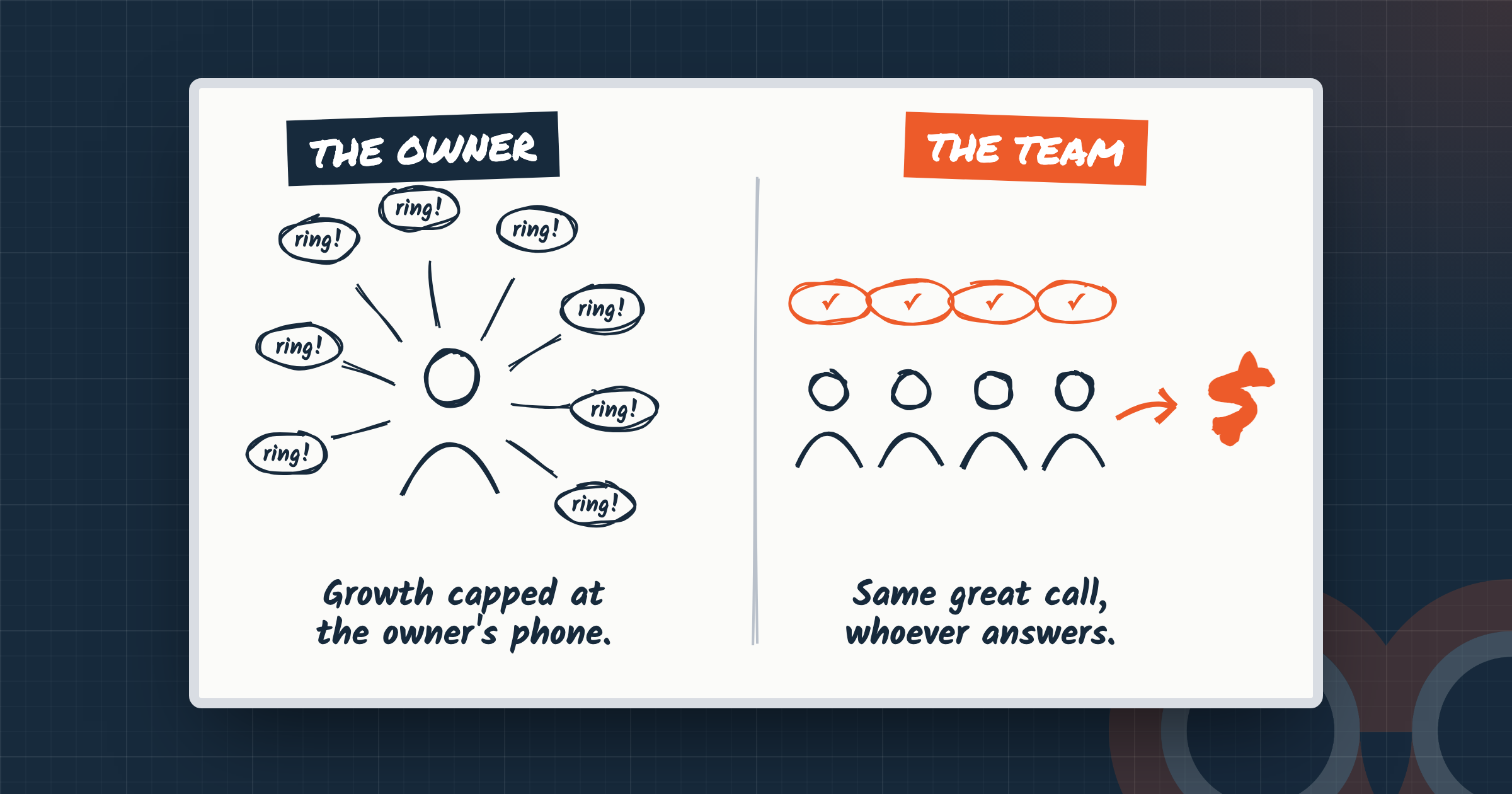
Alex Hill on a chimney-sweeping business capped by how many calls its owner could take, and how consistent employee behaviors lower acquisition costs.

Have you ever read those surveys that examine the primary reasons why employees choose to either stay with an employer or leave? In most of those studies, at the top of the list is an employee\’s relationship with their direct manager or supervisor. Why is this? Because that\’s what most affects the employee\’s day-to-day experience. This is true not only with regard to work processes and procedures, but also to how valued the person feels and how connected to the organization he/she feels. So how does this relate to your culture? Let\’s take a closer look.
It\’s not the signs on the wall
Regardless of how well-defined your culture is, or how nicely you\’ve crafted a set of Fundamentals, they only have meaning in the context of daily activities. I always tell leaders that your culture is not the signs on the wall; it\’s how people actually behave every day. And your managers and supervisors have the biggest impact on this.
You may recall that the 7th step in our 8-step framework is to “Lead your culture by example.” Regardless of what you say or write, your people are learning what really counts by looking at what their leaders do. For example, we can talk all day long about practicing “blameless problem-solving” or “honoring commitments,” but if my direct supervisor gets caught up in blame whenever a problem occurs, or she consistently fails to honor her commitments, then those words mean little to nothing to me. The manager or supervisor is the one who most directly influences most employees\’ experiences with your culture.
No time or resources available for training
But here\’s the issue: in most small and medium-sized companies, we put so little time and attention into the development of our people, and especially our managers and supervisors. To be fair, this is part of what it means to be a smaller company. We usually just don\’t have the resources to devote to leadership skill development.
Having seen this challenge in almost every company we\’ve worked with, we recently developed a full day training workshop to help managers and supervisors develop greater skills in using Fundamentals as they coach their teams. It\’s a highly interactive day that mixes teaching with a significant amount of role-playing and practice. There\’s even a weekly follow-up program we call “eCoach” to dramatically improve the retention of the learned skills.
If you\’d like to learn more about how you can make sure your culture is reaching everyone more effectively by increasing the coaching skills of your managers and supervisors, just give us a call or shoot us an email.
New content on building a high-performing culture, plus what's new on the platform and upcoming events.
3 min read
Alex Hill on a chimney-sweeping business capped by how many calls its owner could take, and how consistent employee behaviors lower acquisition costs.
4 min read
Recognition without stated criteria reads as favoritism. Here is how to build an employee recognition program on defined behaviors instead of gut feel.
3 min read
Instill Flow scores your meetings with AI. CultureWise builds the behaviors your team practices every week. Two tools, two very different jobs.