3 min read
Culture to Cash: How Consistent Customer Experience Becomes a Path to Profit
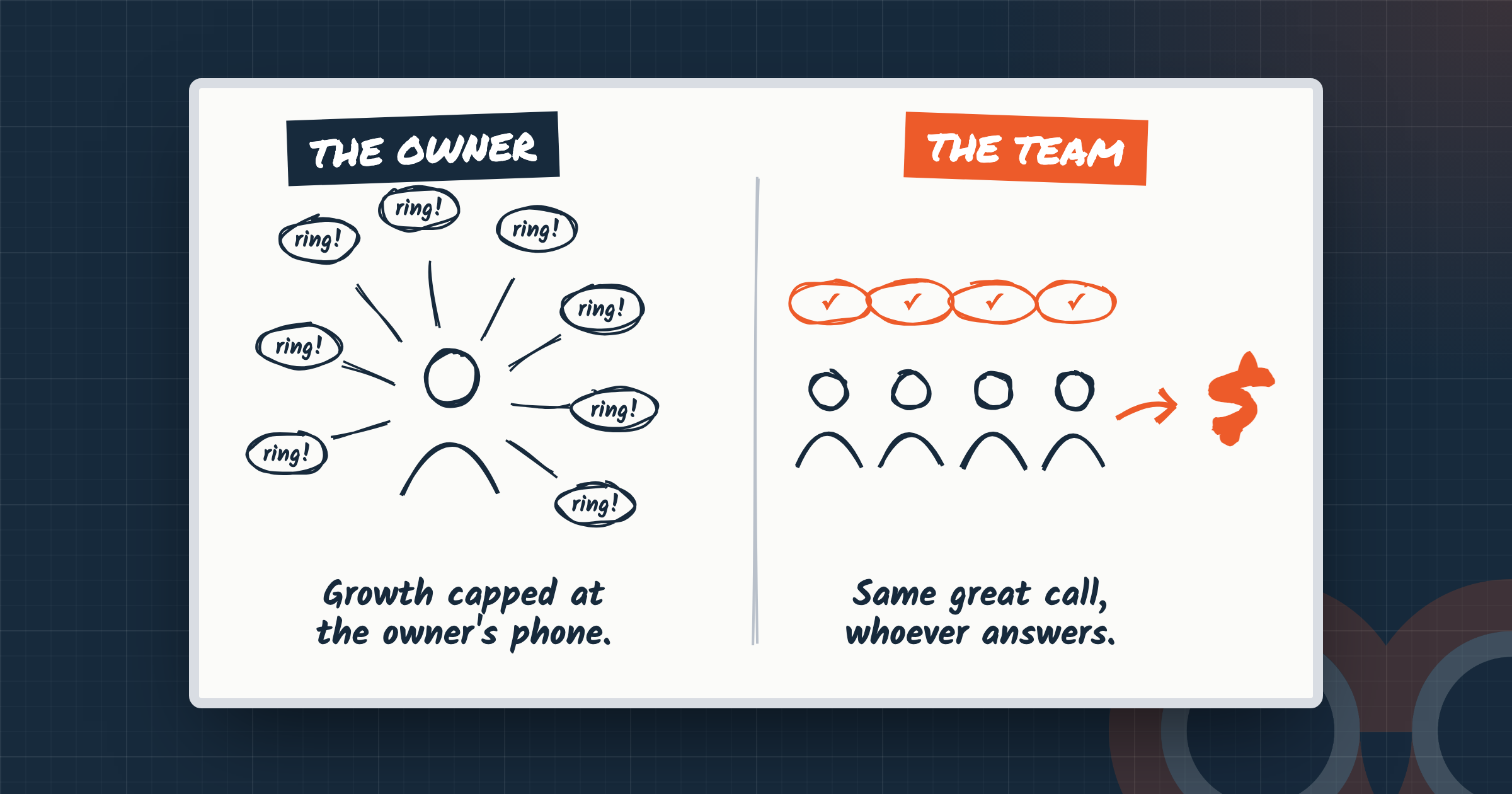
Alex Hill on a chimney-sweeping business capped by how many calls its owner could take, and how consistent employee behaviors lower acquisition costs.
2 min read
In my last blog post, I shared why assessing our current culture, prior to beginning our “design” work, is of surprisingly little value. However, once we\’ve rolled out our Fundamentals and are beginning to practice them, assessing how we\’re doing is both helpful and important. In this post, I\’ll share some thoughts on conducting culture surveys.
Survey design
Since we define culture in terms of specific behaviors (we call them “Fundamentals”), it\’s reasonably straightforward to assess our culture by measuring how we\’re doing in consistently demonstrating those behaviors. In contrast, it\’s far more challenging to assess our performance relative to “values,” because the values tend to be so abstract.
In designing a Fundamentals survey, we write a statement for each Fundamental that describes what you would see if we were exhibiting this behavior. Here are a couple of examples:
HONOR COMMITMENTS:
Our team members do what they say they\’ll do, when they say they\’ll do it. If a commitment becomes impossible to keep, they notify others at the earliest possible time in order to discuss alternatives.
PRACTICE BLAMELESS PROBLEM-SOLVING:
Our team members refrain from placing blame, and instead, focus their attention on solving current problems and preventing future ones.
Notice how clear and specific these are. They\’re observable behaviors.
We ask the survey respondents to say, in their observation, whether we “almostalways, usually, sometimes, seldom, or never” do this. By applying a five-point scale (almost always = 5.0 and never = 1.0), we can give a numerical score to each Fundamental as well as to our overall performance.
Who to survey
We recommend surveying three different constituencies using the same survey for each, but scoring them separately. The first and most important group to survey is your customers. What they experience is far more impactful than what we think of ourselves. And to get credible data, we recommend surveying as many of them as possible.
The second group we recommend surveying is your suppliers and vendors. These are often important business relationships, and even partnerships, and knowing what they see in us is valuable.
The third group, of course, is your own staff. They obviously have the most daily experience with your company and so their observations are important to collect and measure.
Timing and frequency
We typically like to do a survey fairly soon after the Fundamentals are first rolled out and you\’ve begun practicing, normally within the first one to two months. This gives us a baseline from which to measure our improvement over time.
Following that initial survey, we suggest re-surveying once each year. This gives us enough time to work on areas that need improvement and to see if we\’ve, in fact, made those improvements.
The annual Fundamentals System is also an important way of holding yourself accountable and showing that you\’re serious. Asking the world to judge your performance in relation to your Fundamentals demonstrates a meaningful commitment to building a high performing culture, rather than simply “talking a good game.”
If you\’d like to learn more about how you can use the Fundamentals System™ to drive a high performing culture, just shoot us an e-mail or give us a call.
New content on building a high-performing culture, plus what's new on the platform and upcoming events.
3 min read
Alex Hill on a chimney-sweeping business capped by how many calls its owner could take, and how consistent employee behaviors lower acquisition costs.

4 min read
Recognition without stated criteria reads as favoritism. Here is how to build an employee recognition program on defined behaviors instead of gut feel.
3 min read
Instill Flow scores your meetings with AI. CultureWise builds the behaviors your team practices every week. Two tools, two very different jobs.