3 min read
Culture to Cash: How Consistent Customer Experience Becomes a Path to Profit
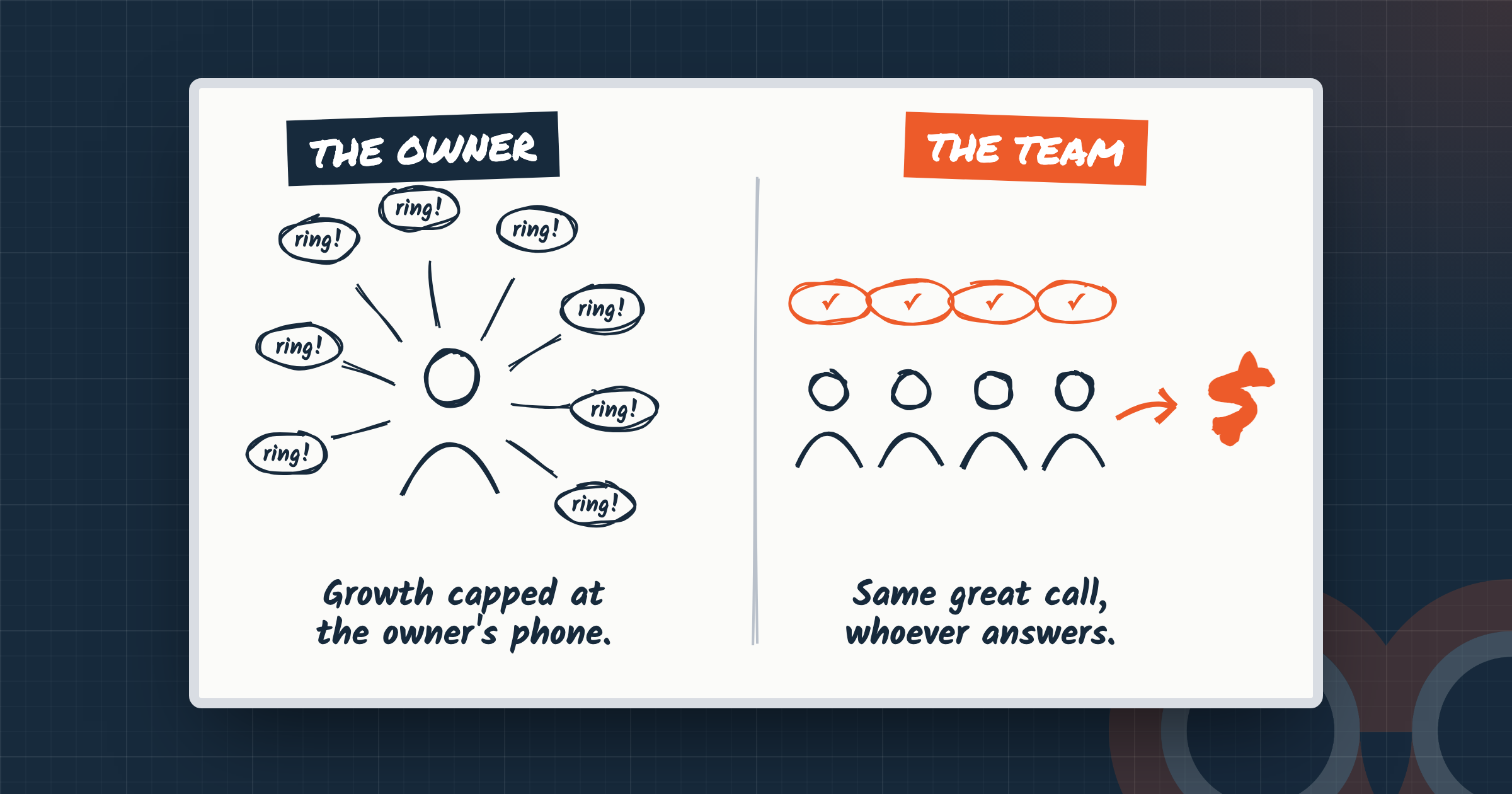
Alex Hill on a chimney-sweeping business capped by how many calls its owner could take, and how consistent employee behaviors lower acquisition costs.

By David Friedman, Founder/CEO
Regular readers of this blog know that we make a pretty big deal about the distinction between “values” and “behaviors” and that we help companies to define their cultures in terms of the behaviors they want to see. And while the approach makes total sense to most leaders once it\’s explained, they often wonder what to do about all the previous statements they\’ve made about their core values. “After all, we just spent the last 10 years talking about our core values and we don\’t want to tell our people “Never mind!” I\’ll use this blogpost to offer you a simple solution for shifting your focus to behaviors without having to “shred” your previous statements.
Values vs behaviors
To review briefly, “values” are abstract concepts like quality, integrity, teamwork, and respect. “Behaviors,” in contrast, are actions. Examples of behaviors are things like “Honor commitments,” “Be a fanatic about response time,” or “Practice blameless problem-solving.” The reason this distinction is important isthat values, being abstract, tend to be vague and they can mean a lot of different things to different people. Because behaviors are much clearer and more specific, they\’re easier to teach and coach and to give people feedback about. They tend to be a lot more practical.
So, what to do about those core values that are posted around your company and that you\’ve talked about for the past 10 years? I find the most useful thing is to describe the behaviors (we call them “Fundamentals“) as the way in which we live to our values on a daily basis. For example, “These 5 core values have been the foundation of our culture since our beginning. But what do these values really mean? Well the following set of Fundamentals describe how we live to those values on a daily basis.” Now we\’re free to focus on our Fundamentals without having had to cancel out our former work on core values.
No need to map one to the other
It\’s important to note here that it\’s neither necessary nor advisable to try to “map” your Fundamentals to the values. In other words, we don\’t need to try to connect the first four Fundamentals to value #1, the next four to value #2, and so on. That just ends up to be a frustrating and unnecessary exercise. Rather, we simply say that the entire set of Fundamentals describes how we live to the entire list of core values, and leave it at that.
We\’ve used this approach for most of our clients who\’ve had well-established previous statements about their culture, and it\’s worked beautifully in every case. If you\’d like to learn more about how you can define your culture in a clearer and more practical way, just shoot us a quick email or give us a call.
New content on building a high-performing culture, plus what's new on the platform and upcoming events.
3 min read
Alex Hill on a chimney-sweeping business capped by how many calls its owner could take, and how consistent employee behaviors lower acquisition costs.
4 min read
Recognition without stated criteria reads as favoritism. Here is how to build an employee recognition program on defined behaviors instead of gut feel.
3 min read
Instill Flow scores your meetings with AI. CultureWise builds the behaviors your team practices every week. Two tools, two very different jobs.